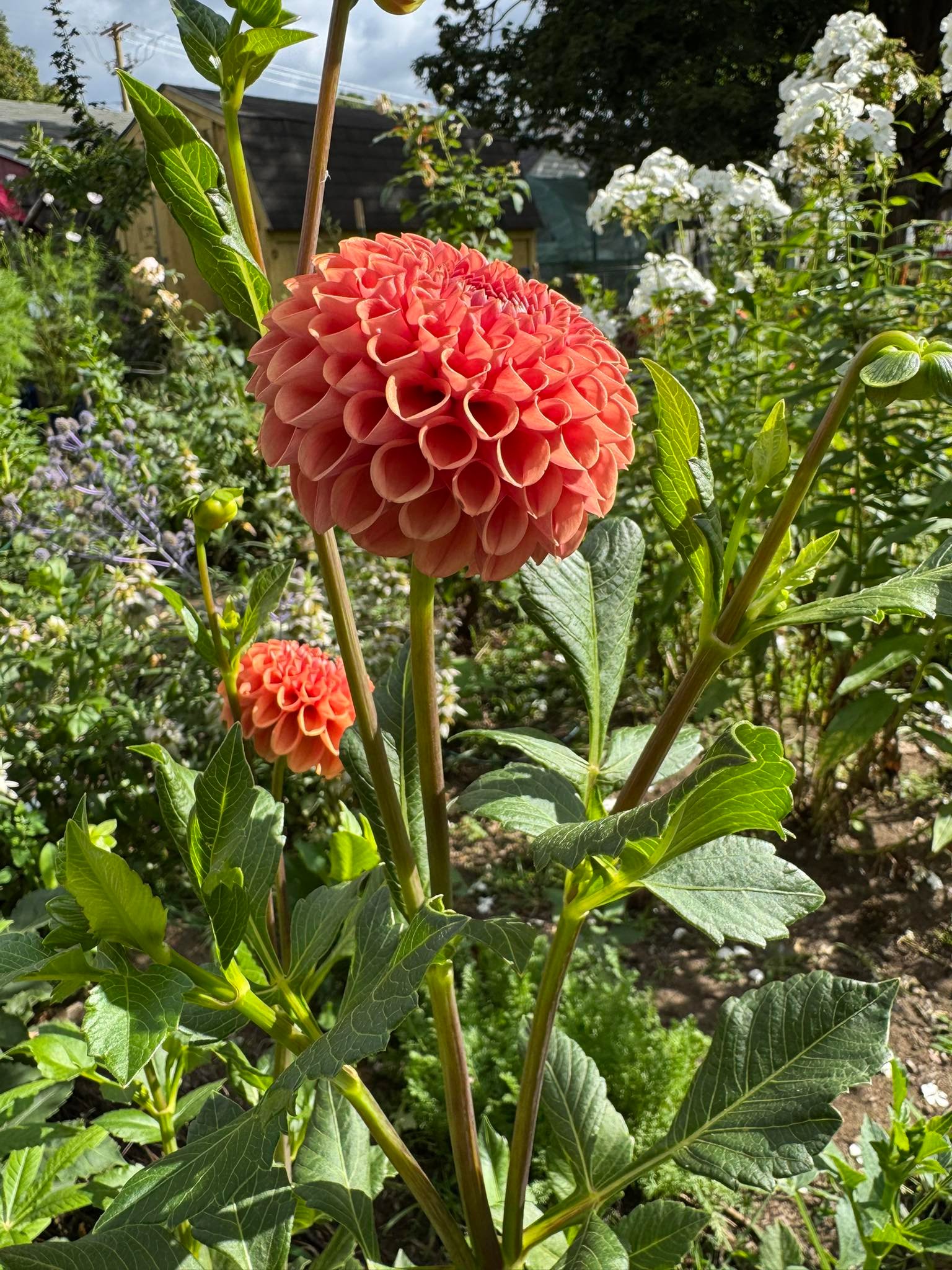
Dahlias have been branded as divas for some reason, and I’m here for the debunking! Many people struggle with dahlias, and the main reason: the bags of marionette clumps at the department store is doomed to fail. Half of them are broken, dried out and when you plunk them in the ground they are going to rot. Them and all the friends that are attached at the stalk. They are shipped in from huge farms that harvest with machines and do not monitor for disease.
You need to choose dahlias that have been grown locally, stored properly, and are in peak physical condition.
That’s where we come in! We have curated a variety of workhorse varieties that will reward you with blooms all season long. We have been growing on a large scale for 5 years now, and we continue to help you learn from our mistakes when we make them!! We typically only grow our own, but when needed, we only buy from trusted US dahlia farmers. We also do all of our own inventory and monitoring for tuber health before we package and ship to you. We have over a thousand tubers this year that we are looking to share. If you are looking to add to your collection, or get one started, let’s be garden besties.
Please enjoy what me and my friend ChatG Kathy came up with to help both my flower farmer and garden enthusiast garden gals choose varieties this year.
Choosing Dahlia Varieties: Why Height Should Be Your First Decision
When selecting dahlias, most people start with color or flower form. Those matter, but height is one of the most important practical factors before plant vigor in determining how well a planting will perform in real garden or farm conditions.
Height affects spacing, staking needs, airflow, harvest efficiency, and how the plants function in arrangements. Choosing varieties without considering mature height often leads to overcrowding, flopping stems, or inefficient use of space.
Understand the main height categories
Dahlias generally fall into three practical height ranges:
Short varieties (12–24 inches)
These are typically border plants or container-friendly dahlias that you find potted at Lowes/Home Depot. They require little to no staking and are useful for edging or tight garden spaces. They are less commonly used for cut flower production due to short stem length.
Medium varieties (24–48 inches)
These dahlias can still produce strong stems suitable for cutting while still remaining manageable without extensive support systems. They work well in mixed borders and small-scale production beds.
Tall varieties (48–72+ inches)
Tall dahlias are commonly used in cut flower production because they produce long stems and high yield per plant. However, they require staking, netting, or other structural support. Without support, they are prone to lodging, especially in wind or heavy rain.
Before planting, define the role of each variety:
Cut flower production: prioritize medium to tall varieties with strong stems
Landscape planting: medium varieties balance aesthetics and structure
Border or container use: short varieties reduce maintenance needs
Market bouquets: taller varieties generally provide more usable stem length
Spacing is directly tied to height
Plant height determines spacing requirements. Taller dahlias need more room for airflow and structural support systems. A general guideline:
Short: 12–18 inches apart
Medium: 18–24 inches apart
Tall: 24–36 inches apart
Crowding tall varieties increases disease pressure and reduces stem quality.
Support planning should happen before planting
If tall dahlias are part of the design, staking systems should be planned in advance. Options include:
Hortonova or similar support netting
Individual stakes per plant
Caged rows or grid systems
Installing supports early prevents damage to roots later in the season.
Final consideration
Color and form influence visual impact, but height determines whether a dahlia planting is stable, efficient, and productive. Treat height as the structural foundation of your variety selection, then choose color and form within those constraints.
A well-planned dahlia bed is not just visually successful—it is easier to manage, more productive, and more resilient throughout the season.
Don’t forget to stop on down for Dahlia Daze this weekend at Dove Haven Farm in Kingsbury!
We’d love to chat,
Elisia and the Floral Therapy farmily
Recent Comments